
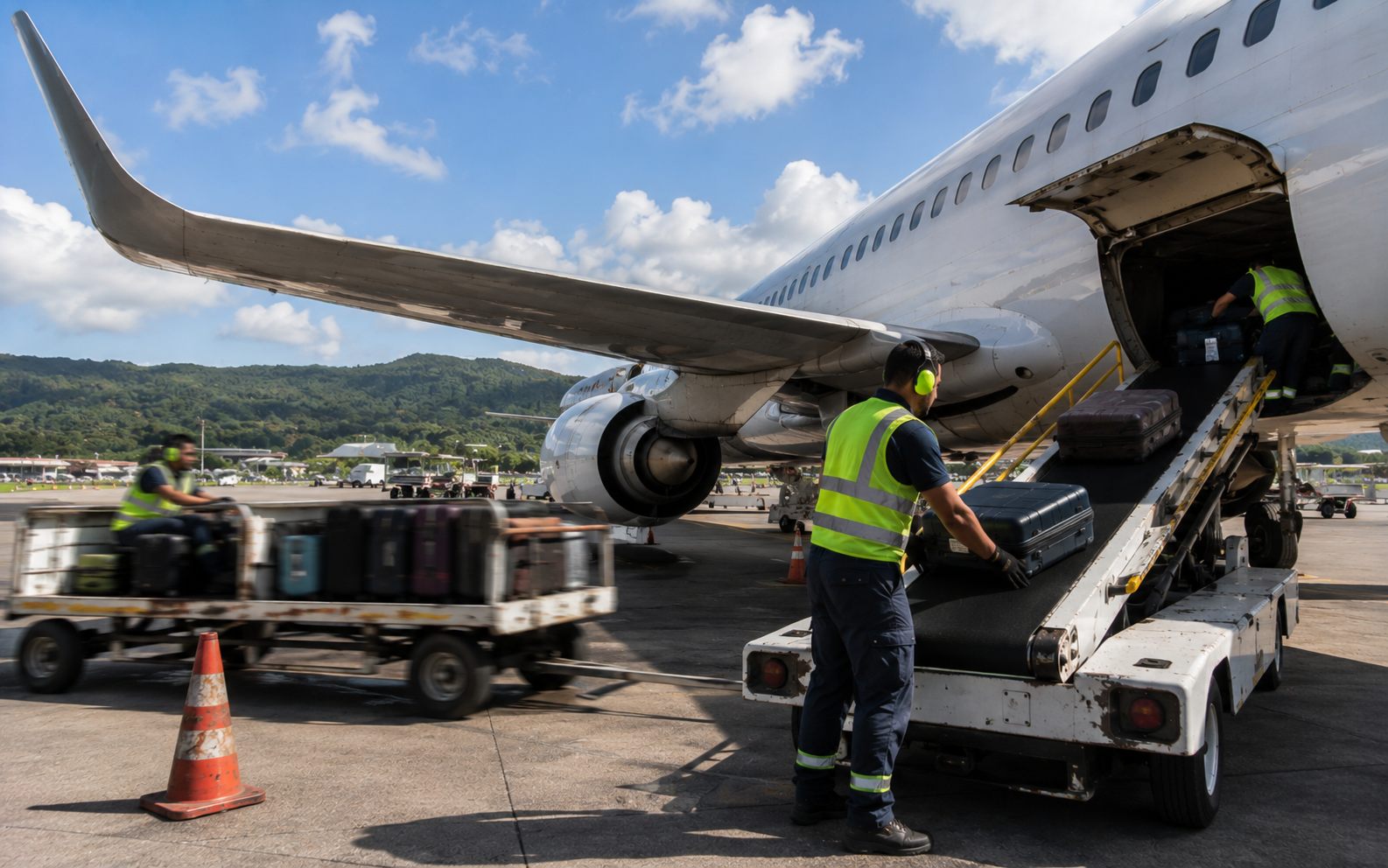
Most delays on the ramp aren't dramatic. They're the quiet gaps: the ground power unit that arrives after the APU is already shut down, the load plan that lands with the loadmaster a beat too late, the fuel truck queued behind another stand. None of them is a crisis on its own. Stacked across a turn, they're the difference between an on-time push and a slot missed.
Stage everything before wheels-down
Our coordinators build the turn backwards from the scheduled departure. Chocks, cones, GPU, and the load plan are staged at the stand before the aircraft touches down, not called for once it's parked. The marshaller already knows the arrival config; the fuel order is confirmed against the flight plan, not the ramp agent's best guess.
- GPU connected and online before APU shutdown
- Load and balance sheet in the loadmaster's hands at chocks-on
- Fuel uplift pre-ordered against the filed plan
- Catering and cleaning briefed to the same clock as the ramp
One clock, one coordinator
The reason it works isn't a gadget — it's accountability. A single coordinator runs the whole turn against one timeline, so catering, fuel, ramp, and crew transport aren't four vendors guessing at each other's timing. When something slips, one person sees it and moves the next task up.
Boring? Completely. That's the point. The best turn is the one nobody remembers, because the aircraft left exactly when it was supposed to.